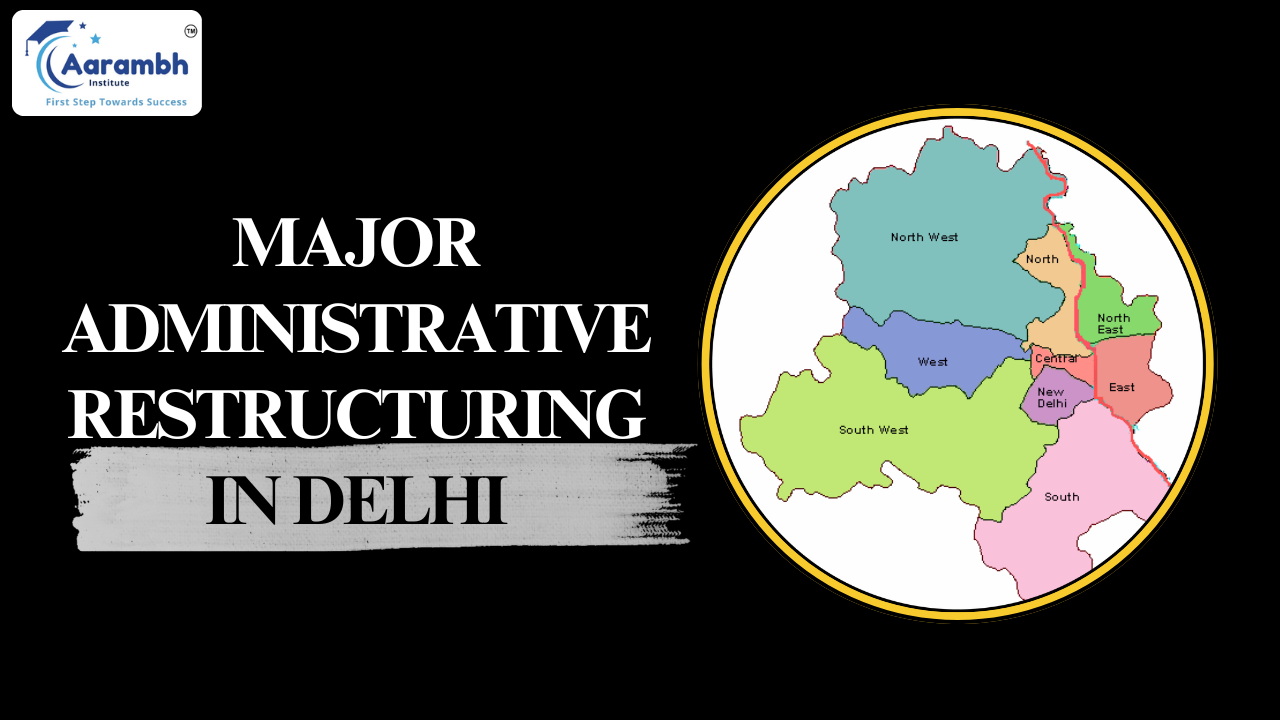
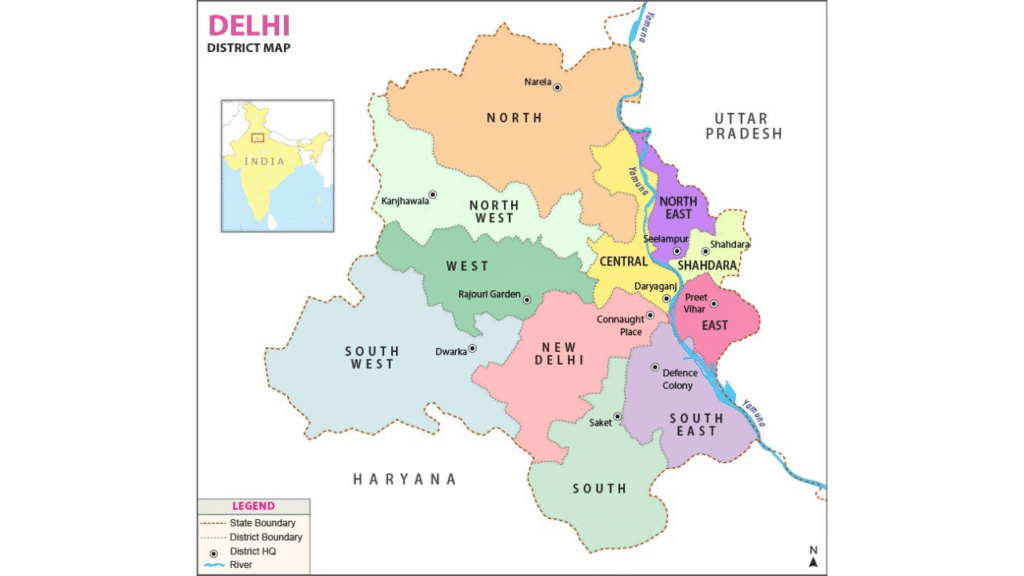
It is proposed to increase the number of revenue districts in Delhi from 11 to 13, which indicates a major administrative restructuring in the capital.
The number of subdivisions (SDM offices) will be increased from 33 to 39 so that people can access administrative services closer to their areas.
The Delhi Cabinet has given in-principle approval to this proposal, and after receiving final permission, the file will be sent to the Lieutenant Governor (LG) for implementation.
The main objective of this restructuring is to decentralise governance, increase administrative efficiency, and make government services more accessible to citizens.
A mini-secretariat will be established in each district, where most departmental services—except law and order—will be available at a single location.
The new districts are being prepared using the existing 11 municipal zones as the basis, so that geographical division can be made more systematic.
Under this restructuring, the Sadar zone will be made a part of the newly created Old Delhi district.
The names of East Delhi and North-East Delhi districts will be changed to Shahdara South and Shahdara North respectively, to make regional identity clearer.
A large portion of South-West Delhi will be separated to create a new Najafgarh district.
The purpose of this change is to provide relief to citizens from travelling long distances for government work and to reduce the burden on overcrowded offices.
The restructuring is expected to increase the speed of file disposal, improve transparency, and strengthen accountability.
Considering Delhi’s growing population and the increasing need for decentralised administration, this step is regarded as important for enhancing the effectiveness of governance.