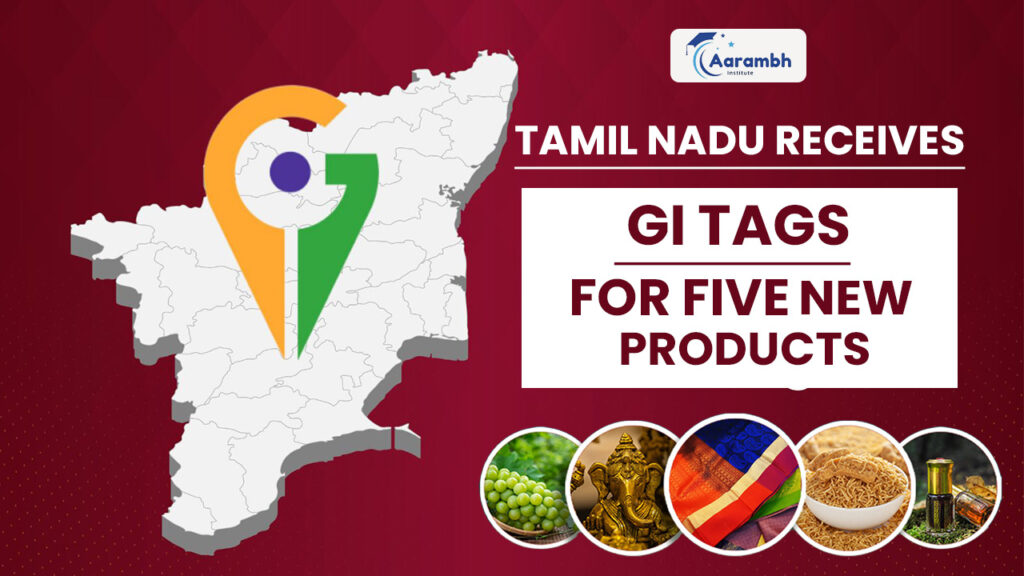
Recently, Tamil Nadu has achieved a significant development in preserving its cultural and handicraft heritage. Five new products have been added to the state’s GI (Geographical Indication) tag list, taking Tamil Nadu’s total GI portfolio to 74.
The list of these five newly GI-approved products is as follows:
Woraiyur cotton sari: A traditional cotton sari with a strong handloom heritage.
Thooyamalli rice: A special variety of traditional rice.
Kavindapadi nattu sakkarai: Locally produced traditional jaggery.
Namakkal makkal pathirangal: Traditional utensils and cookware made from solid soapstone.
Ambasamudram choppu saman: Handcrafted wooden toys and traditional wooden items.
Brief Introduction of the New GI
Woraiyur cotton sari: This sari is produced in the Manamedu region of Tiruchirappalli (Tiruchi) in Tamil Nadu. Its uniqueness lies in its traditional weaving, korvai border, geometric patterns, and simple yet elegant colors.
Thooyamalli rice: This is a traditional variety of rice cultivated by local farmers for centuries. With the GI tag, this rice will now be able to establish its identity in national and international markets.
Kavindapadi nattu sakkarai: This traditional variety of jaggery originates from the Kavindapadi area of Erode district in Tamil Nadu. Its purity, chemical-free processing, and traditional preparation method make it distinctive.
Namakkal makkal pathirangal: These are traditional utensils and cookware made from solid soapstone, crafted by local artisans. With the GI tag, their uniqueness and quality have now been officially certified.
Ambasamudram choppu saman: These handcrafted wooden toys and traditional household wooden items, typically made in the Ambasamudram region, have also received the GI tag, helping preserve this local handicraft tradition.
Importance of Receiving the GI Tag
Protection of geographical and traditional identity: The GI tag provides legal recognition to those products whose quality, reputation, or characteristics are linked to their specific geographical origin and traditional production. This helps prevent the use of counterfeit or adulterated products in other states or countries.
Economic benefits for farmers, artisans, and local industries:When a specific product receives a GI tag, its demand increases, its branding improves, and it receives a better price in the market. This provides farmers and artisans with better returns.
Preservation of culture and heritage:The traditional arts, agricultural diversity, and local practices of states like Tamil Nadu are preserved through the GI tag, allowing future generations to recognize and value these traditional products.
Boost to rural development and local employment:The GI tag strengthens local handicrafts, product manufacturing, agriculture, and traditional industries, thereby supporting the rural economy and increasing employment opportunities.
What Message Does This Send to Society and the State?
This decision shows that Tamil Nadu values its local identity, culture, agricultural diversity, and handicraft heritage.
The GI tag not only protects the geographical and qualitative identity of products but also serves as a means to provide artisans and farmers with fair value and better market opportunities.
Many more traditional products may receive GI tags in the future, which will further strengthen Tamil Nadu’s heritage and local economy.