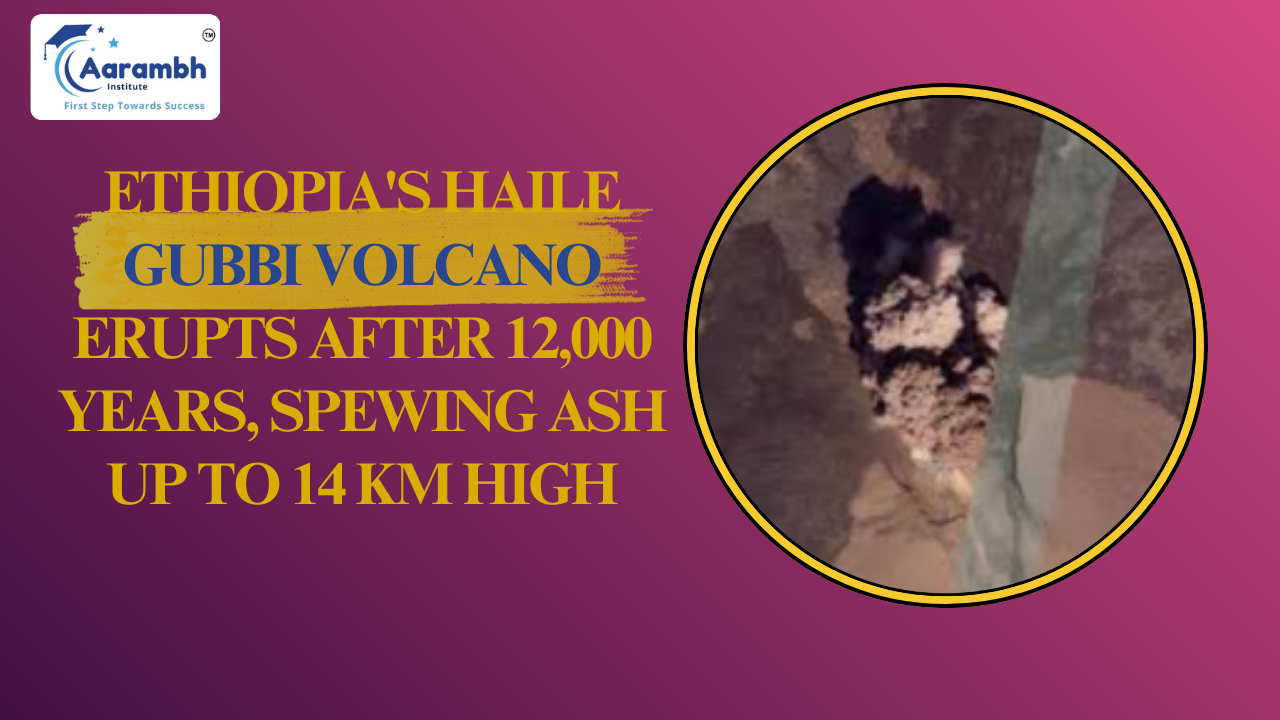
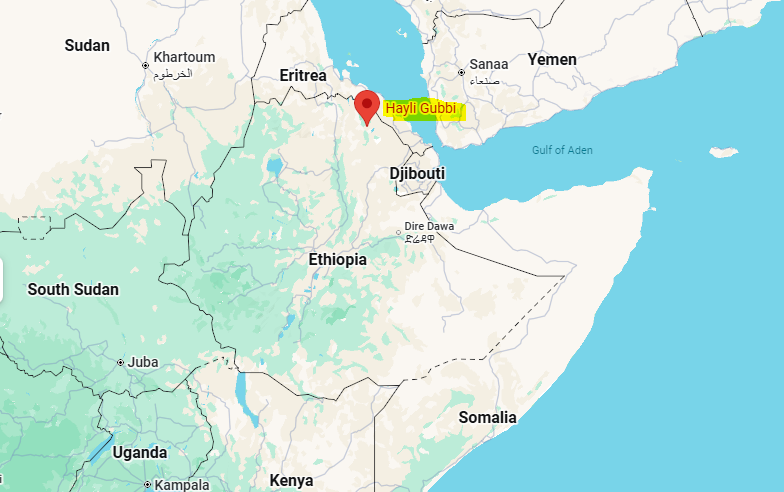
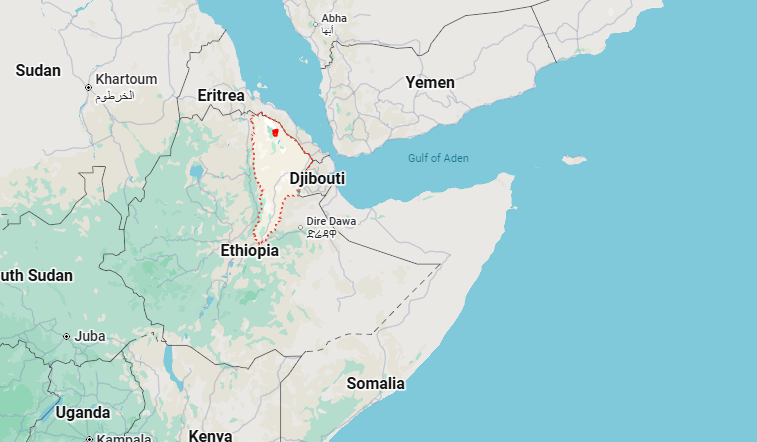
The Hayli Gubbi volcano erupted on 23 November 2025 after nearly 12,000 years of dormancy. This volcano is located in Ethiopia’s Afar region, near the border of Ethiopia and Eritrea.
The Afar region is part of the African Rift Valley, which is considered one of the most tectonically active regions on Earth.
During the eruption, the volcano sent dense ash plumes up to about 14 kilometres into the atmosphere.
According to the Toulouse Volcanic Ash Advisory Centre, the volcanic ash drifted with the wind and reached Yemen, Oman, India and northern Pakistan.
Satellite images clearly showed tall columnar structures of high-level ash rising from the crater of the volcano.
Scientists have confirmed that there had been no recorded eruption of the Hayli Gubbi volcano during the Holocene period (the last 10–12 thousand years).
The Global Volcanism Program of the Smithsonian Institution has also verified that there is no Holocene-era activity found in the historical records of this volcano.
Residents living in nearby villages of Ethiopia reported heavy ash fall, although official information about casualties or displacement is not yet available.
This rare eruption has alerted local authorities and global agencies to assess potential impacts on aviation routes, air quality and public health.
Special monitoring and temporary adjustments are being made to international flight routes, as ash poses a serious hazard to aircraft.
This event provides an important scientific opportunity to understand active geological processes and tectonic dynamics in the Afar region.