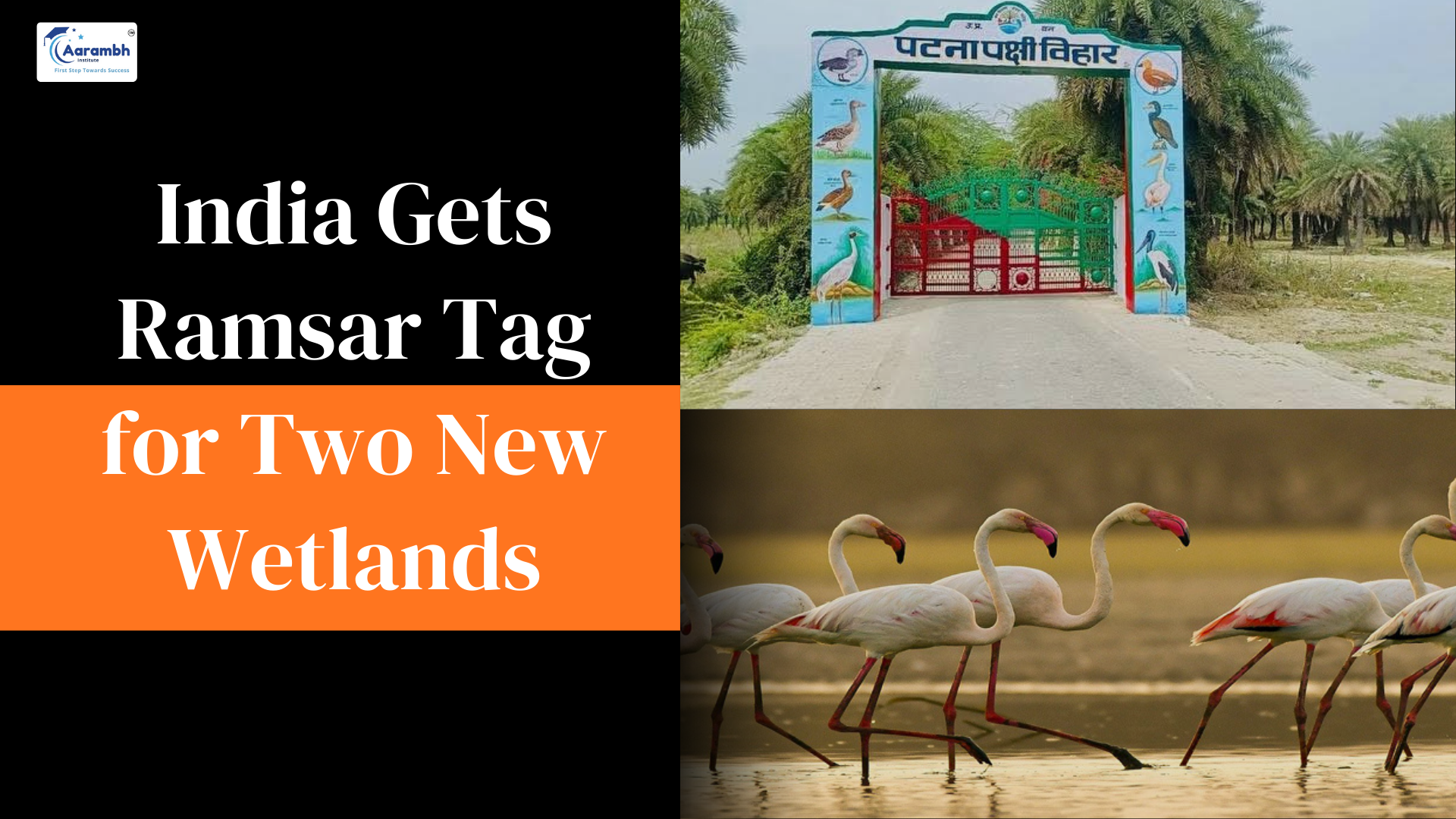
India has once again demonstrated its commitment to biodiversity conservation and environmental protection with the latest addition of two ecologically significant wetlands to the prestigious Ramsar List of Wetlands of International Importance under the Ramsar Convention.
These new designations bring the total number of Ramsar sites in India to 98, reflecting a significant expansion in the country’s conservation efforts over the past decade.
What Are Ramsar Sites?
The Ramsar Convention is an international treaty established in 1971 for the conservation and sustainable use of wetlands. A Ramsar site is a wetland recognized as being of international importance based on criteria such as biodiversity, ecosystem services, rare species habitat, and significance for migratory birds.
Designation as a Ramsar site brings global recognition and supports stronger protection measures, research, sustainable development, and community engagement. It also helps in combating environmental threats such as habitat loss and climate change impacts.
The Two Newly Designated Ramsar Wetlands in India
1. Patna Bird Sanctuary — Etah, Uttar Pradesh
Located in the Etah district of Uttar Pradesh, the Patna Bird Sanctuary has long been a haven for avian life. It is especially important as a wintering ground for migratory waterfowl, attracting birds from Central Asia and Siberia during the cold season.
The sanctuary supports a rich variety of bird species and plays a vital role in regional biodiversity conservation. Its inclusion in the Ramsar list highlights the importance of protecting such habitats which are under pressure from development and climate changes.
2. Chhari-Dhand — Kutch, Gujarat
The Chhari-Dhand wetland is located on the edge of the vast Banni Grasslands in the Kutch district of Gujarat. This area represents a unique desert wetland ecosystem that flourishes seasonally, especially after monsoons when large shallow expanses fill with water.
Chhari-Dhand is a critical habitat for:
Migratory and resident bird species
Endangered and native mammals such as chinkara, wolves, caracal, desert cats, and desert foxes
This Ramsar designation is particularly significant as it marks Chhari-Dhand as one of Gujarat’s key wetland conservation areas, strengthening efforts to maintain ecological balance amid rapid environmental changes.
Prime Minister Narendra Modi Lauds Conservation Efforts
Prime Minister Narendra Modi warmly welcomed the new Ramsar designations and congratulated the local communities, conservationists, and government stakeholders who worked toward preserving these precious natural habitats.
India’s Growing Network of Ramsar Sites
Under the leadership of PM Modi and with strong participation from state governments and local communities, India’s Ramsar network has seen remarkable growth:
From 26 Ramsar sites in 2014, India’s count has increased to 98 by early 2026, marking a growth of more than 276%.
This increase underscores India’s ongoing focus on ecological preservation, sustainable development, and environmental stewardship on both national and international platforms.
Why this Matters
Wetlands are among the planet’s most productive ecosystems. They:S
upport rich biodiversity, including numerous bird and fish species
Act as natural water filtersStore carbon and help mitigate climate change
Regulate floods and droughtsProvide livelihoods to local communities
Designation as Ramsar sites helps safeguard these benefits while promoting research, responsible tourism, and long-term conservation planning.
Conclusion
The addition of Patna Bird Sanctuary and Chhari-Dhand to the Ramsar list is a significant achievement for India’s environmental conservation journey. It highlights the country’s proactive stance in protecting wetlands and preserving biodiversity for future generations.
These milestones are a strong reminder that sustainable development and ecological protection can go hand in hand — benefiting nature, communities, and the planet as a whole.