
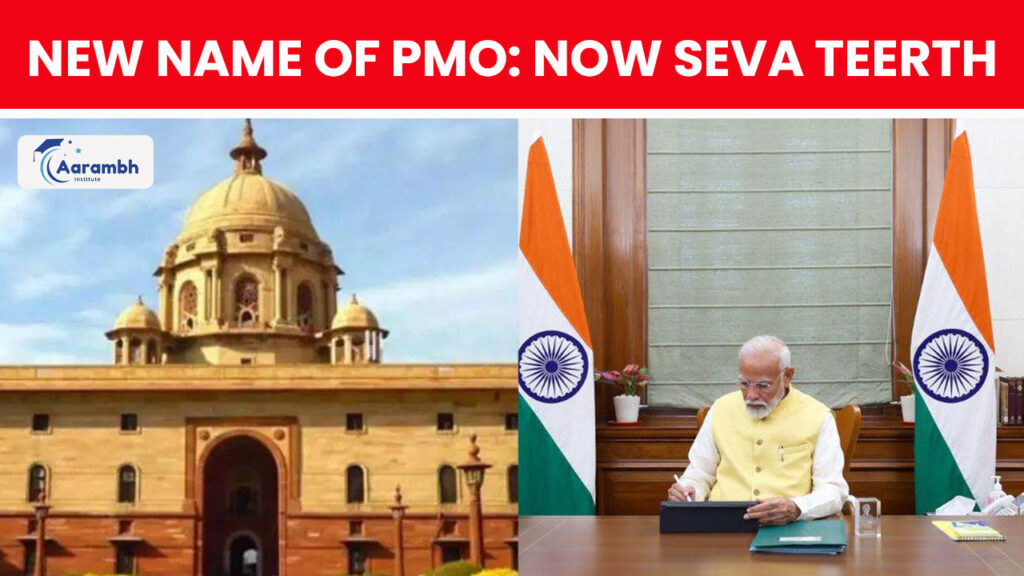
- The Government of India has taken a historic and symbolic decision by renaming the Prime Minister’s Office (PMO) as “Seva Teerth.”
- This move is seen not merely as a name change, but as an attempt to shift the core spirit of governance from “power to service.”
Why Was the Name Changed? — Purpose and Vision
- According to the government, this change marks a cultural transformation in administrative thinking.
- The new name “Seva Teerth” reinforces the idea that the PMO is not just a center of authority but a sacred space dedicated to public service.
- The government says this step distances institutions from old “colonial symbolism” and redefines them toward public welfare, service, and people-centric governance.
New Structure — What Will Change?
- The Prime Minister’s Office will be shifted to a new, modern campus named “Seva Teerth-1.”
- This campus will include advanced administrative facilities and a reformed structural setup.
- As part of this process, the names of several important government residences and offices across the country are also being changed —
- For example, the Governor’s official residence, earlier called ‘Raj Bhavan,’ will now be renamed ‘Lok Bhavan.’
Background — Not the First Time
This change is part of a broader pattern witnessed in recent years:
- Rajpath was renamed Kartavya Path.
- The official residence of the Prime Minister was renamed Lok Kalyan Marg.
- Now, PMO and several other administrative buildings are being renamed to shift the public perception from symbols of power to symbols of duty and service.
Key Discussion Points — For Your Readers
- Will this change remain limited to names, or will it bring real transformation in administrative functioning and public accountability?
- How effective will the message of “power to service” be, and will it influence public perception?
- Will such naming reforms strengthen institutional trust and connection, or will they remain symbolic gestures?