why in news?
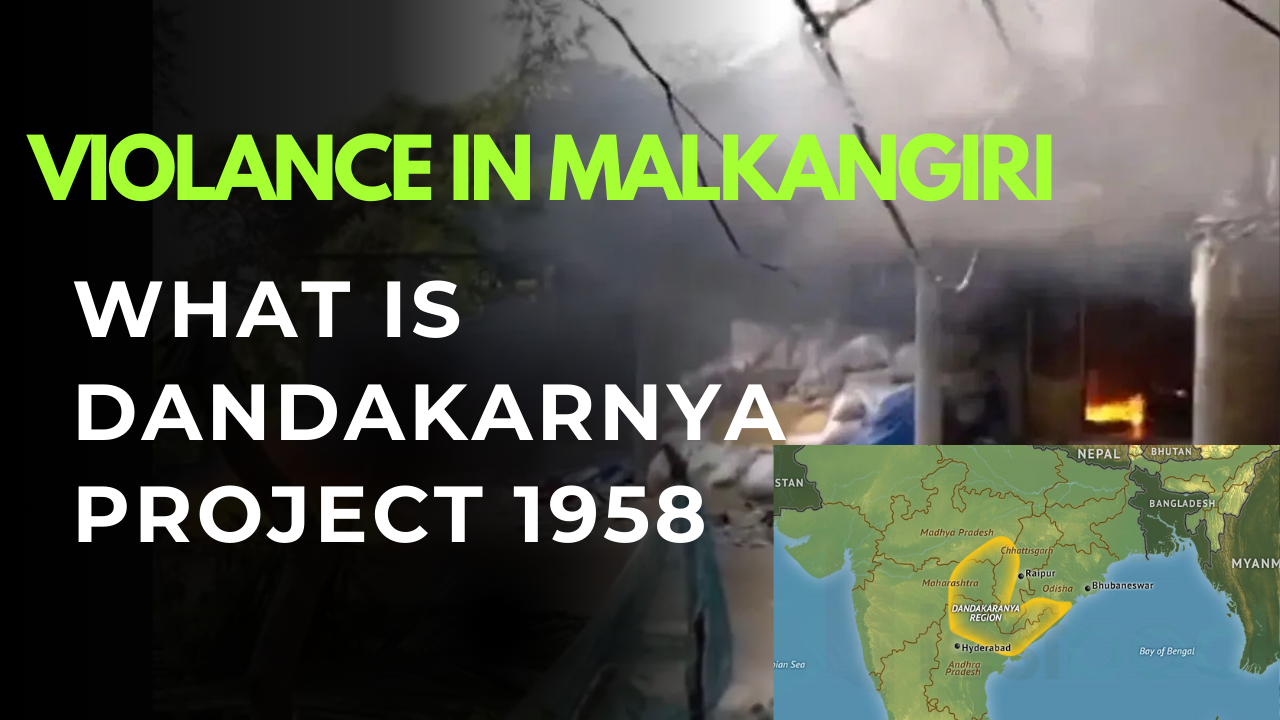
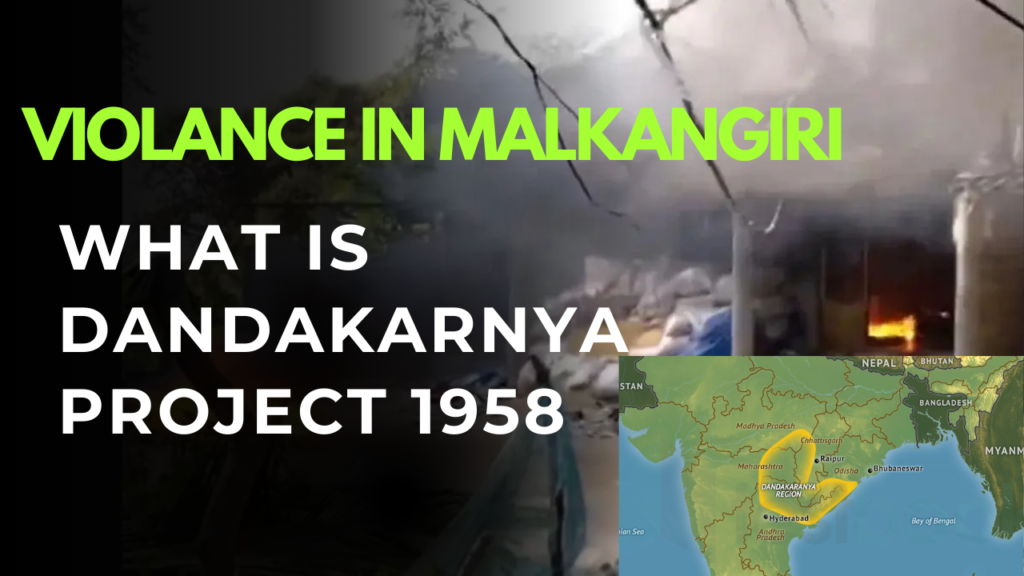
- Large-scale communal/ethnic violence erupted in MV-26village (Malkangiri district) after the murder of a 55-year-old tribal woman, Lake Podiami, whose headless body was found in a river. Her death triggered widespread outrage.
Events
- A mob of about 5,000 people, reportedly from Rakhelguda (tribal community), attacked neighbouring MV-26, a village where many Bengali-speaking settler families live. They set houses and property on fire, destroying structures, vehicles and belongings.
- Most of the affected families are Bengali settlers — around 100 families reside in MV-26 — who allege targeted violence.
- Multiple reports indicate 50+ houses torched or destroyed, along with shops and personal property. Looting and destruction of valuables (gold, cash) have been reported in some accounts.
- Estimated damage to property is around ₹3.4-3.8 crore (Rs 34–38 million).
- Police and Border Security Force (BSF) have been deployed to restore order and patrol the affected area.
- : at least 6 people connected to the violence have been detained, and one person charged in relation to the murder.
- Internet services were suspended several times, including recent extensions (36-hour periods), to curb the spread of rumours and misinformation and maintain public order.
- Relief measures include financial assistance: ₹30,000 to the deceased’s family and a request for further support (₹4 lakh) from the Odisha Chief Minister’s Relief Fund.
- The ruling Biju Janata Dal (BJD) has formed a 7-member fact-finding team to assess the situation and recommend measures.
communal tensions
- While the immediate trigger was the murder and ensuing mob retaliation, deeper historical and social factors are contributing to communal tensions: Many of the Bengali-speaking families in Malkangiri trace their settlement in the region back to policies like the Dandakaranya Project of 1958 (see below).
- A Reddit commentary about historical settlement patterns points to demographic changes and perceived economic disparities between tribal communities and settlers as underlying friction points.
What Is the Dandakaranya Project (1958)?
- The Dandakaranya Project (DNK Project) was an Indian government resettlement programme started in 1958 to relocate displaced persons from what was then East Pakistan (now Bangladesh) and to support development of the tribal hinterland in central India.
Purpose of the Project
- After the Partition of India (1947), a large number of Bengali Hindu refugees fled East Pakistan.
- Initial rehabilitation efforts in West Bengal, Assam, and Tripura became insufficient.
- The Government of India decided to settle refugees in sparsely populated tribal regions of Odisha, Chhattisgarh (then part of Madhya Pradesh), and Andhra Pradesh.
Objectives
The project was meant to:
- Resettle thousands of displaced refugee families.
- Promote integrated development of the region.
- Improve livelihoods for tribal populations through infrastructure, agriculture, industries and essential services.
Implementation
- The Dandakaranya Development Authority (DDA) was established in Koraput (Odisha) to administer the project.
- Efforts included irrigation infrastructure, dams, transport, forestry, health, education, and establishment of new settlements — including Malkangiri and other local towns.
Challenges & Shortcomings
- Agriculture proved difficult due to poor soil quality, aridity, and ecological constraints.
- Actual refugee settlement was far below original projections (about 1,464 families settled vs. 20,000 planned).
- Tribals often did not hold formal land titles, leading to land access disputes and perceptions of dispossession.
Connection Between Dandakaranya Project and Recent Violence
- Places like Malkangiri were part of the Dandakaranya settlement plan and house communities of Bengali-speaking settlers, many descendants of those resettled in the 1950s and 1960s.
- Over decades, economic disparities and land ownership issues have contributed to social tensions between indigenous tribal communities and settler populations — factors believed to underlie recent outbreaks of violence.