
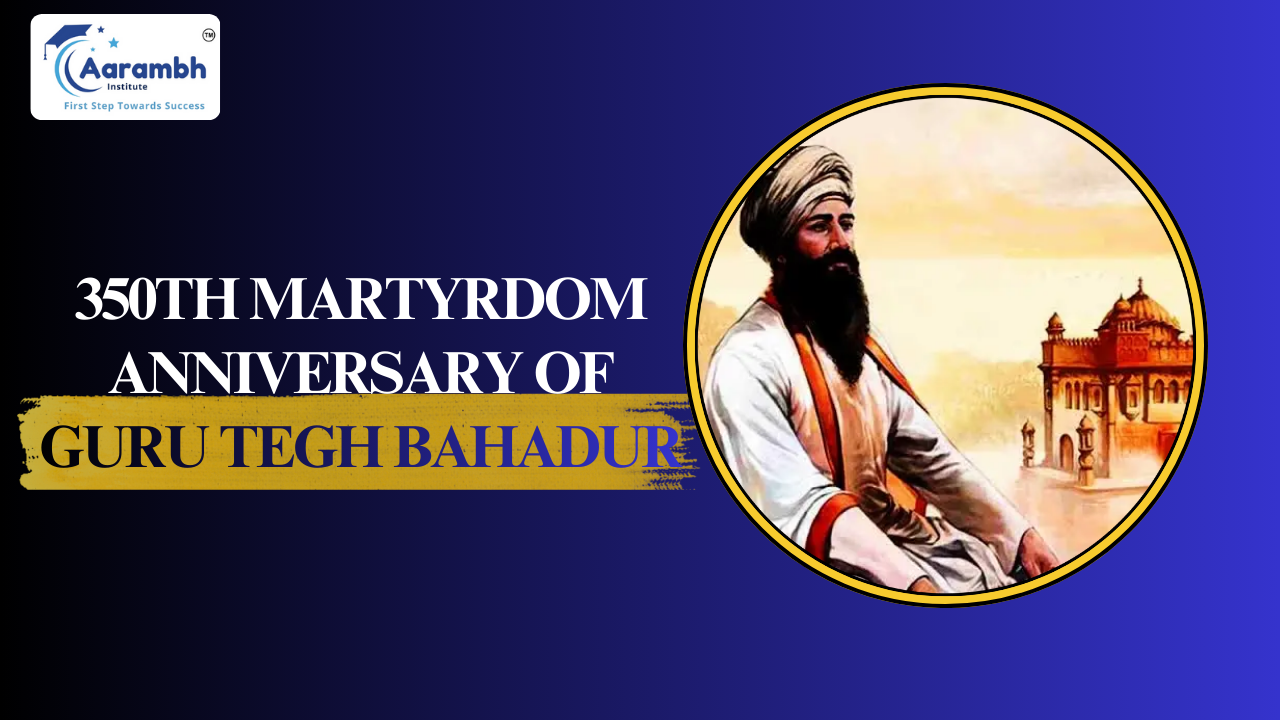
- The 350th martyrdom anniversary of Sri Guru Tegh Bahadur is being celebrated with major events at Gurdwara Sri Sis Ganj Sahib in Delhi and Sri Anandpur Sahib in Punjab.
- This celebration also coincides with the 350th Guruship anniversary of Sri Guru Gobind Singh, which is an extremely significant occasion in Sikh history.
- The purpose of these events is to highlight Guru Tegh Bahadur’s unparalleled sacrifice for the protection of religious freedom and the relevance of his universal teachings.
A Decisive Struggle for Religious Freedom
- The martyrdom of Guru Tegh Bahadur in 1675 is remembered as a historic protection of religious freedom.
- During Mughal rule, when Kashmiri Pandits were under pressure for forced conversions, they sought protection from Guru Tegh Bahadur.
- Guru Tegh Bahadur sacrificed his life to defend their religious rights and conveyed the message of protecting human dignity.
- Later, Guru Gobind Singh described this sacrifice as “the defence of sacred religious symbols,” interpreting it as a broader message against oppression.
Universal Principles Beyond Ideology
- Sikh philosophy views this sacrifice as Sarbat Da Bhala — meaning the welfare of all.
- This decision of Guru Tegh Bahadur was not limited to any one community, nor was it tied to any political purpose; it was based on universal freedom of justice, compassion, and religious expression.
- His teachings continue to guide diverse societies toward harmony, equality, and respect for religion.
Legacy of Courage and Sikh Identity
- The sacrifices of Bhai Mati Das, Bhai Sati Das, and Bhai Dayala, who were martyred along with Guru Tegh Bahadur, are also an important part of Sikh remembrance and identity.
- The Sikh community is encouraged to maintain its Sabat Soorat — the complete Sikh identity — and to protect the dignity of religious symbols such as the kirpan and the karra.
- The Guru’s principle — neither frighten anyone nor live in fear of anyone — remains an inspiring guide for courage and self-respect.
Facts
- Sri Guru Tegh Bahadur was the ninth Guru of the Sikhs.
- His martyrdom in 1675 is considered a historic symbol of the protection of religious freedom in India.
- Gurdwara Sis Ganj Sahib in Delhi represents the site of his martyrdom.
Relevance in the Present Time
- The programs organised by Sikh institutions and community bodies emphasise unity, introspection, and renewed adherence to the Guru’s core teachings.
- These events also highlight the importance of respecting religious identity, safeguarding constitutional rights, and seeking justice in long-standing community issues.
- This anniversary inspires society to uphold mutual respect, protect freedom, and work toward building a just and harmonious society.