Recent research has brought to light an important discovery related to ancient human history, which provides essential evidence for the study of early human civilization, skills, and global migration.
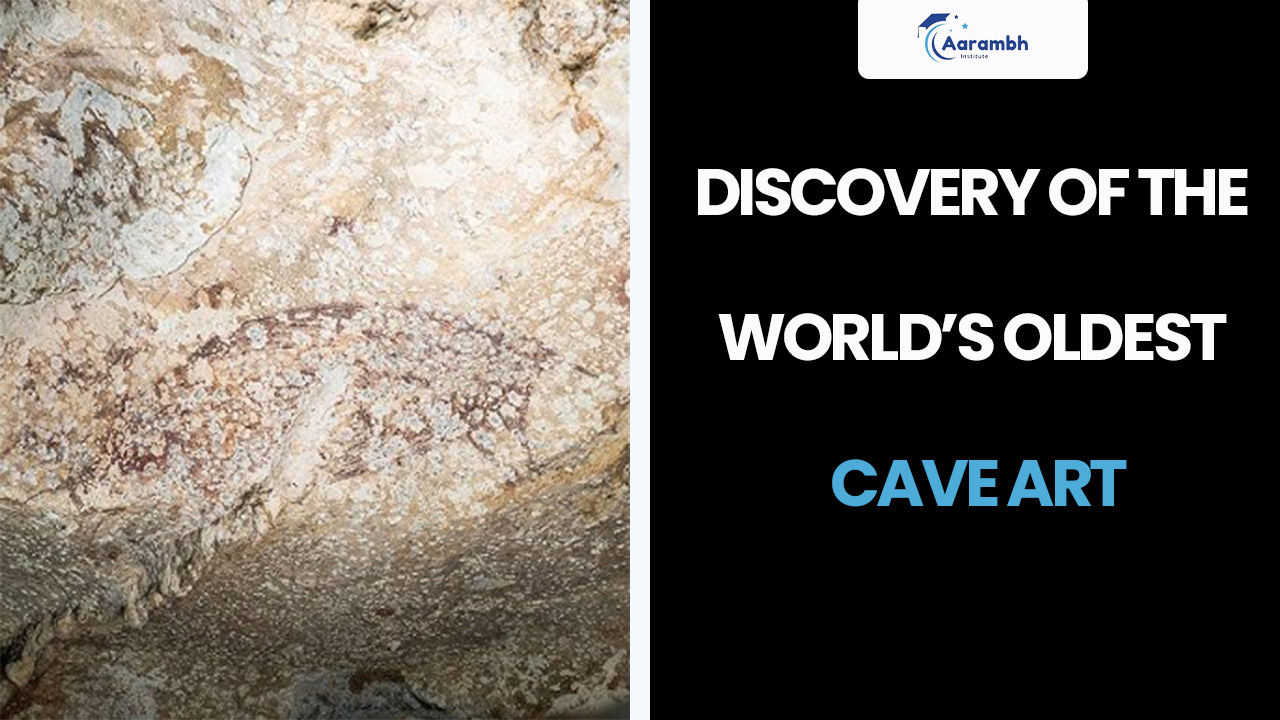
On Indonesia’s Muna Island, located in Sulawesi Province, researchers discovered a hand stencil image in a cave named Liang Metanduno, which is about 67,800 years old and is currently considered the world’s oldest known cave art.
This artwork is a stencil of a human hand, created by spraying pigment onto the cave wall.
Researchers estimated its age using the uranium-thorium dating technique, which determined its minimum age to be 67,800 years.
Earlier, in 2024, cave paintings found in the Sulawesi region were estimated to be about 51,200 years old, which are approximately 16,000 years younger than this discovery.
Historical and Scientific Significance
Historical and Scientific Significance: This discovery shows that even in such an early period, humans used symbolic art and cognitive skills, reflecting their mental development and cultural behavior.
Early Human Migration: The research indicates that early human migration towards East Asia and Australia may have taken place through the Indonesian islands, supporting access to Sahul (the ancient landmass).
Global Context: This artwork is older than contemporaneous cave paintings found in places such as Europe and Spain, which could lead to significant changes in the established timeline of human history.