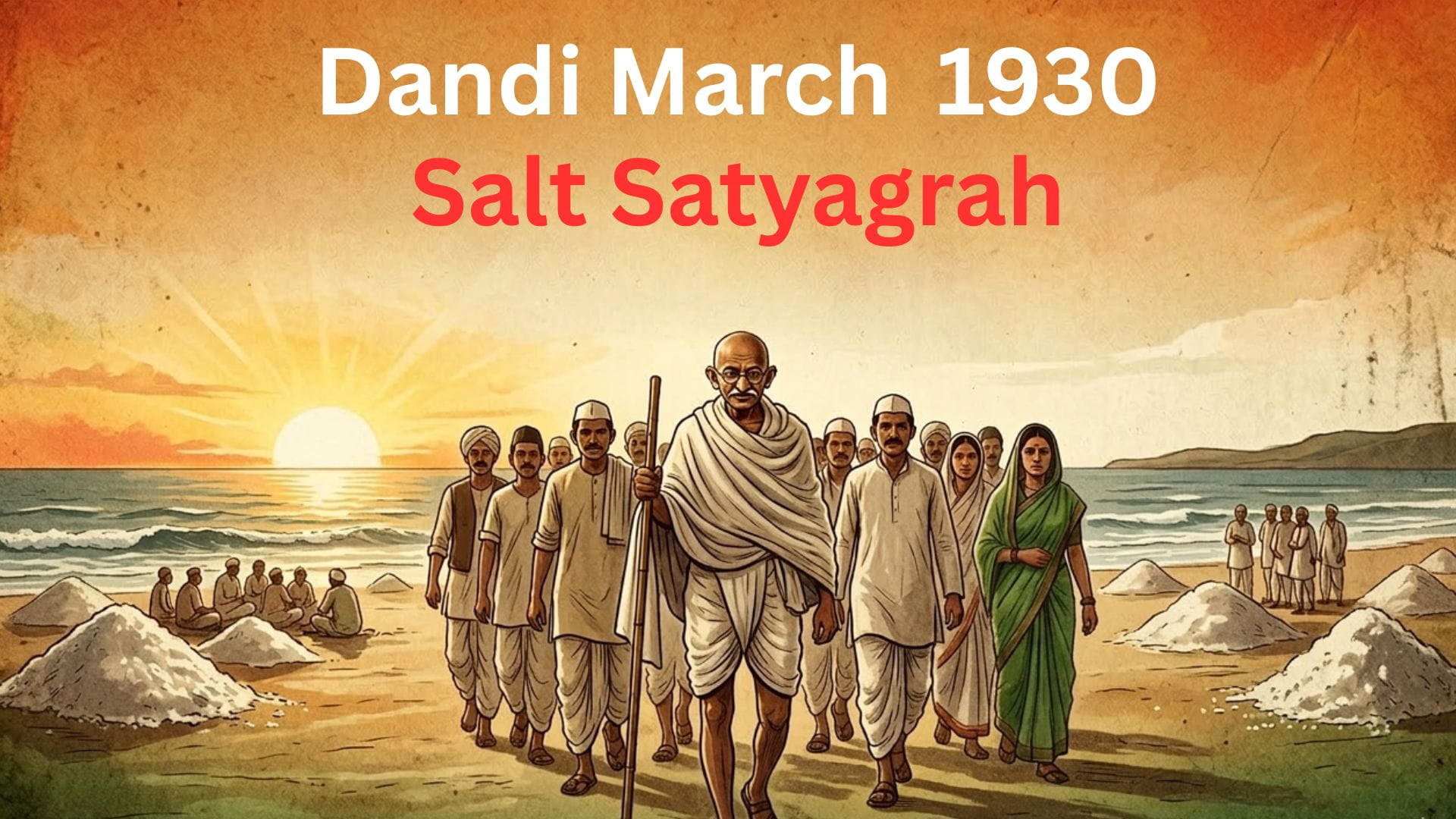
The Vice President of India paid tribute to the freedom fighters and said that the spirit of self-reliance of the Dandi March continues to inspire India even today in becoming a self-reliant and developed nation.
Introduction
The Dandi March carried out in 1930 under the leadership of Mahatma Gandhi was a historic event in the Indian freedom movement.
This movement was started in protest against the salt tax and salt monopoly of the British government.
Timeline
The Dandi Yatra began on 12 March 1930 from Sabarmati Ashram located in Gujarat and ended on 6 April 1930 at Dandi village.
In the journey of about 240 miles, initially 78 followers accompanied Gandhi Ji, which later turned into a massive mass movement.
Main Objective
The main objective of this movement was to oppose the salt tax imposed by the British government and the monopoly over salt production.
Salt was a commodity used by all sections of society, therefore Gandhi Ji made it the symbol of the movement.
Violation of Salt Law
On 6 April 1930, Gandhi Ji violated the British salt law by picking up natural salt from the seashore of Dandi.
After this incident, the Civil Disobedience Movement intensified across the country.
Movement in Other Regions
C. Rajagopalachari broke the salt law at Vedaranyam (Madras Presidency).
K. Kelappan organized a salt march in the Malabar region.
Repression and Arrests
The British government carried out widespread arrests to suppress the movement.
On 5 May 1930, Mahatma Gandhi was arrested.
After this, Sarojini Naidu led a peaceful protest at the Dharasana Salt Works.
Historical Significance of Dandi March
The Dandi March brought international recognition to the Indian freedom movement.
This movement inspired many non-violent movements across the world, including the civil rights movement of Martin Luther King Jr.